Type of Text Poster

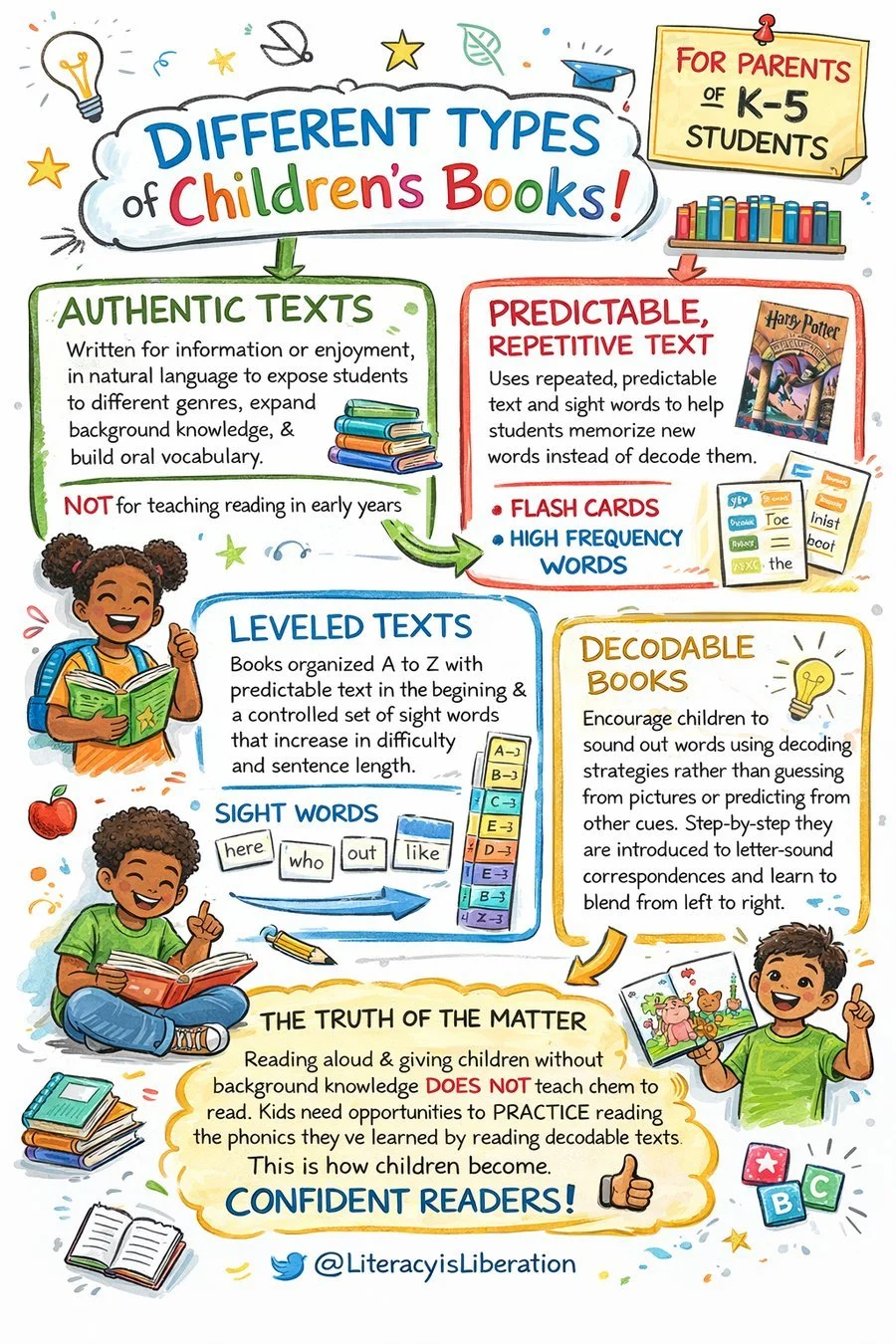
Understanding different types of children’s books
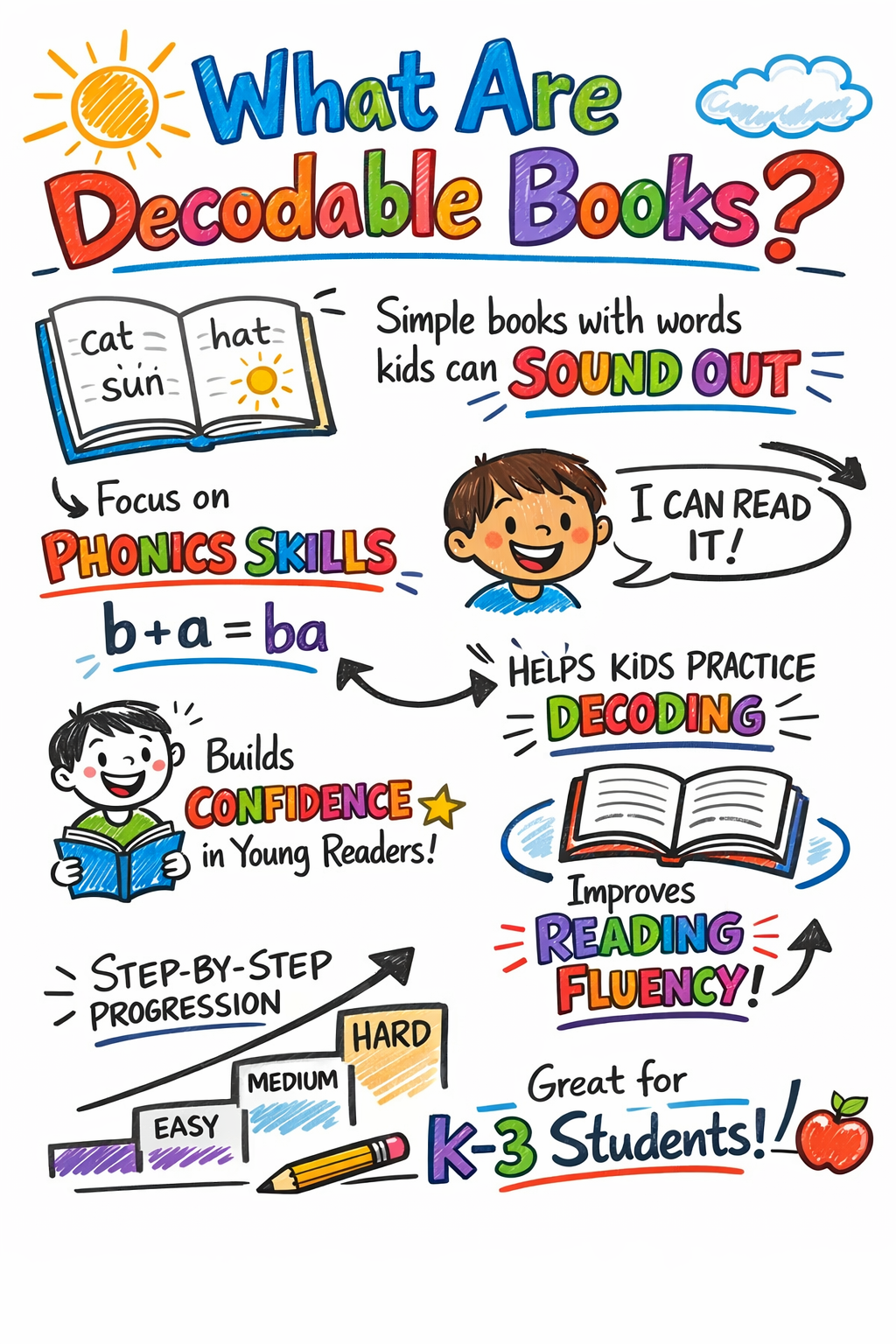
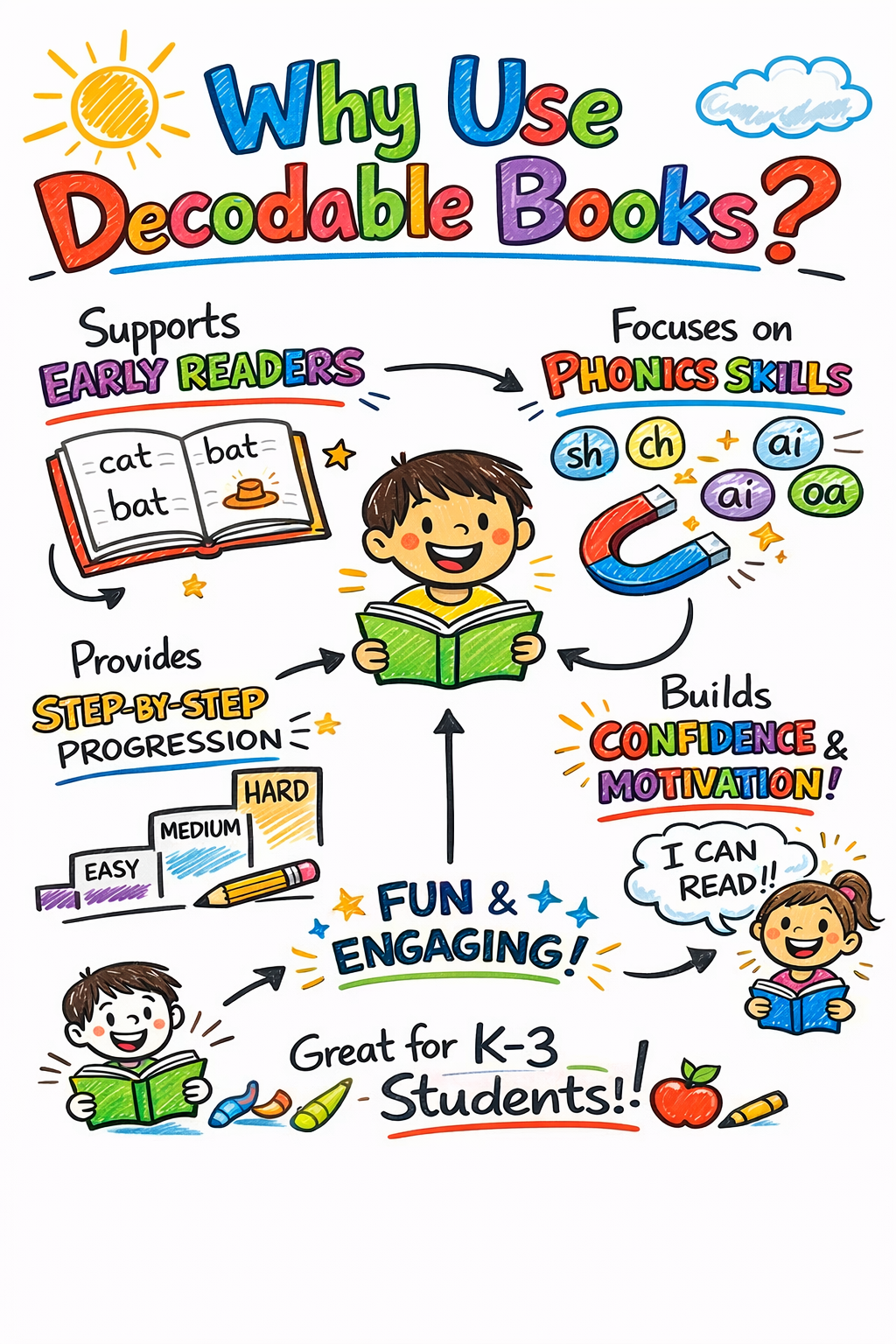
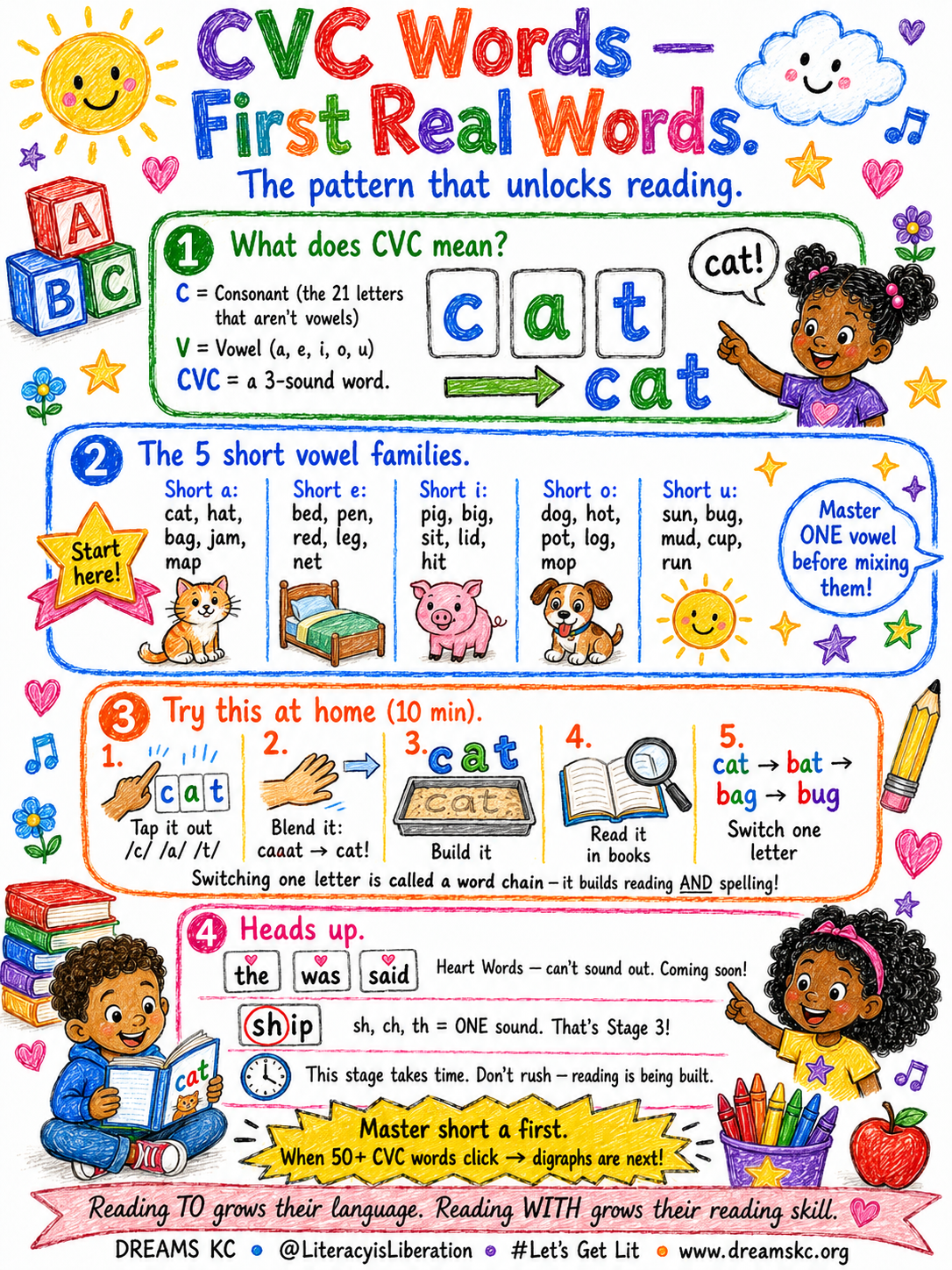
Colorful illustrated poster explaining decodable books for young children. Features a sun, cloud, open book with simple word examples, a smiling boy with speech bubble saying 'I can read it,' and a smiling girl holding a book. Highlights phonics skills, decoding, reading fluency, and step-by-step progression from easy to hard, aimed at K-3 students.

Understanding Decodable Books

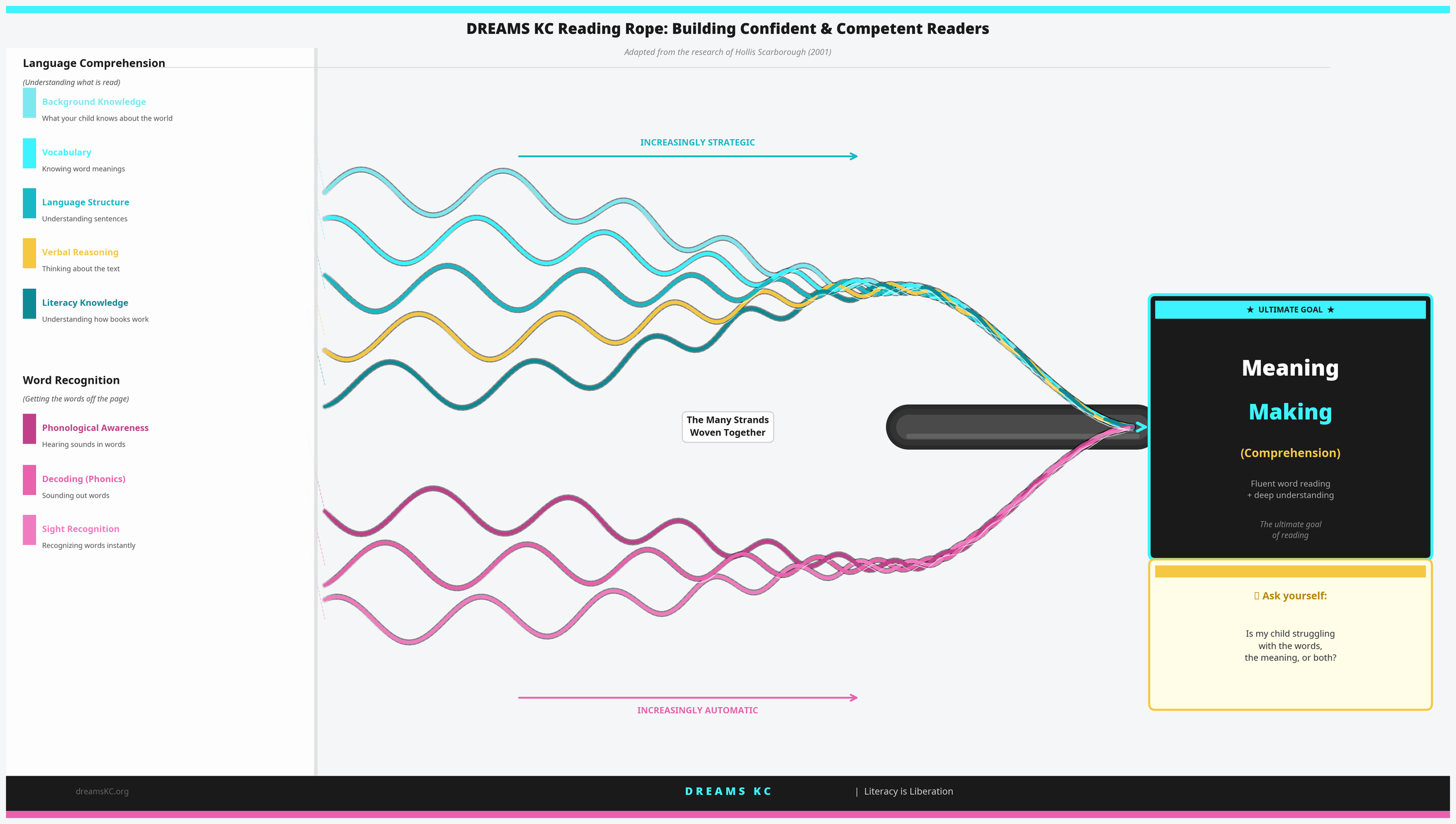
Flow chart illustrating the stages of reading development from background knowledge, vocabulary, language structure, verbal reasoning, and literacy knowledge to word recognition, which includes phonological awareness, decoding, and sight recognition, culminating in the final comprehension phase where the reader understands the meaning, leading to fluent reading and deep understanding.

Understanding Scarborough’s Reading Rope

Reading is not just “sounding out words.”

Reading is your child’s brain doing multiple things at the same time—quickly, automatically, and often without them even realizing it.

This visual shows that reading is like a rope made of many strands. Each strand represents a skill your child must learn. Over time, those strands are woven together to create strong, skilled reading.
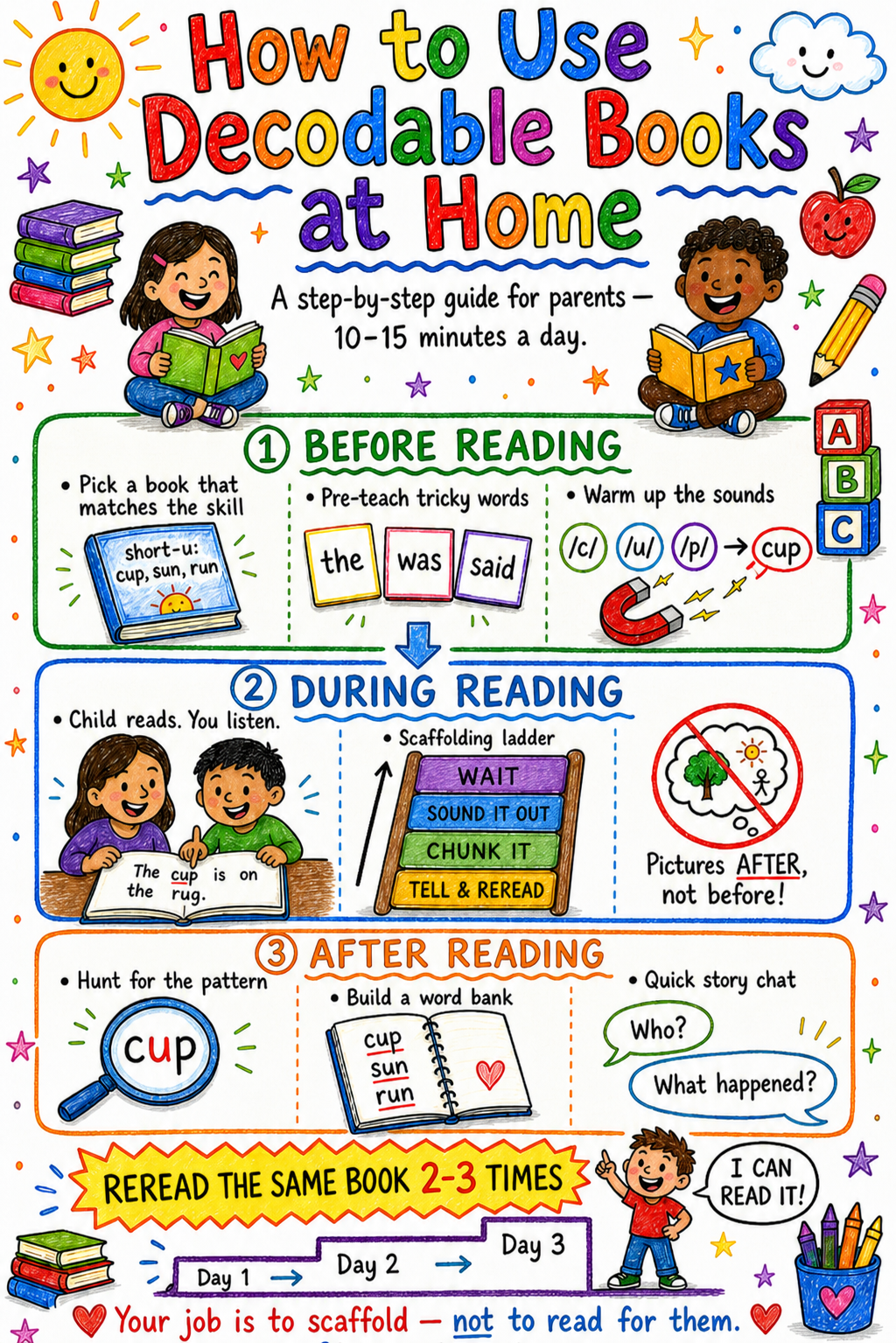
Colorful infographic explaining the benefits of decodable books for early readers. Features include supporting early readers with step-by-step progression, focusing on phonics skills, building confidence and motivation, and making reading fun and engaging for K-3 students.

Why use Decodable Books

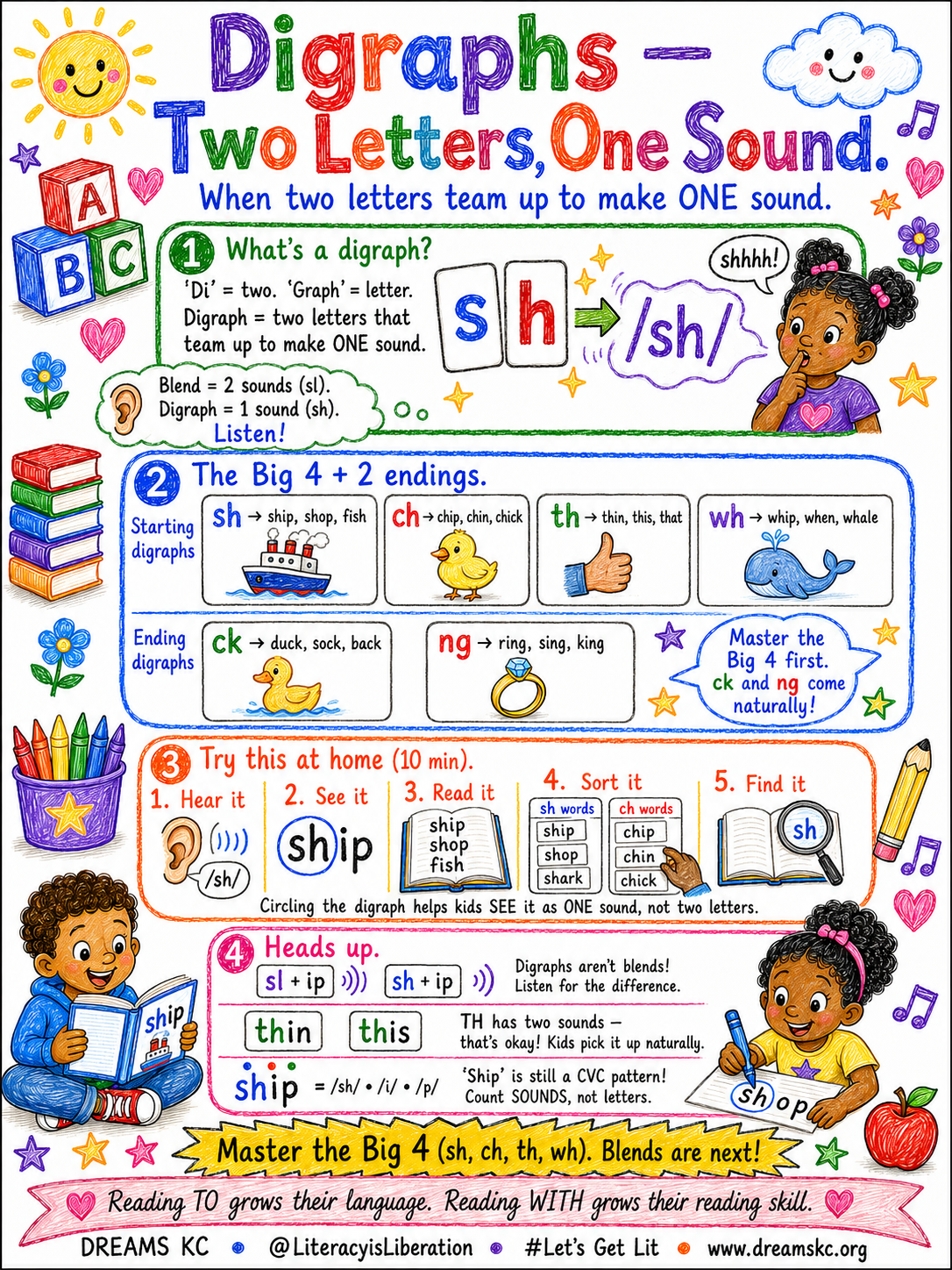
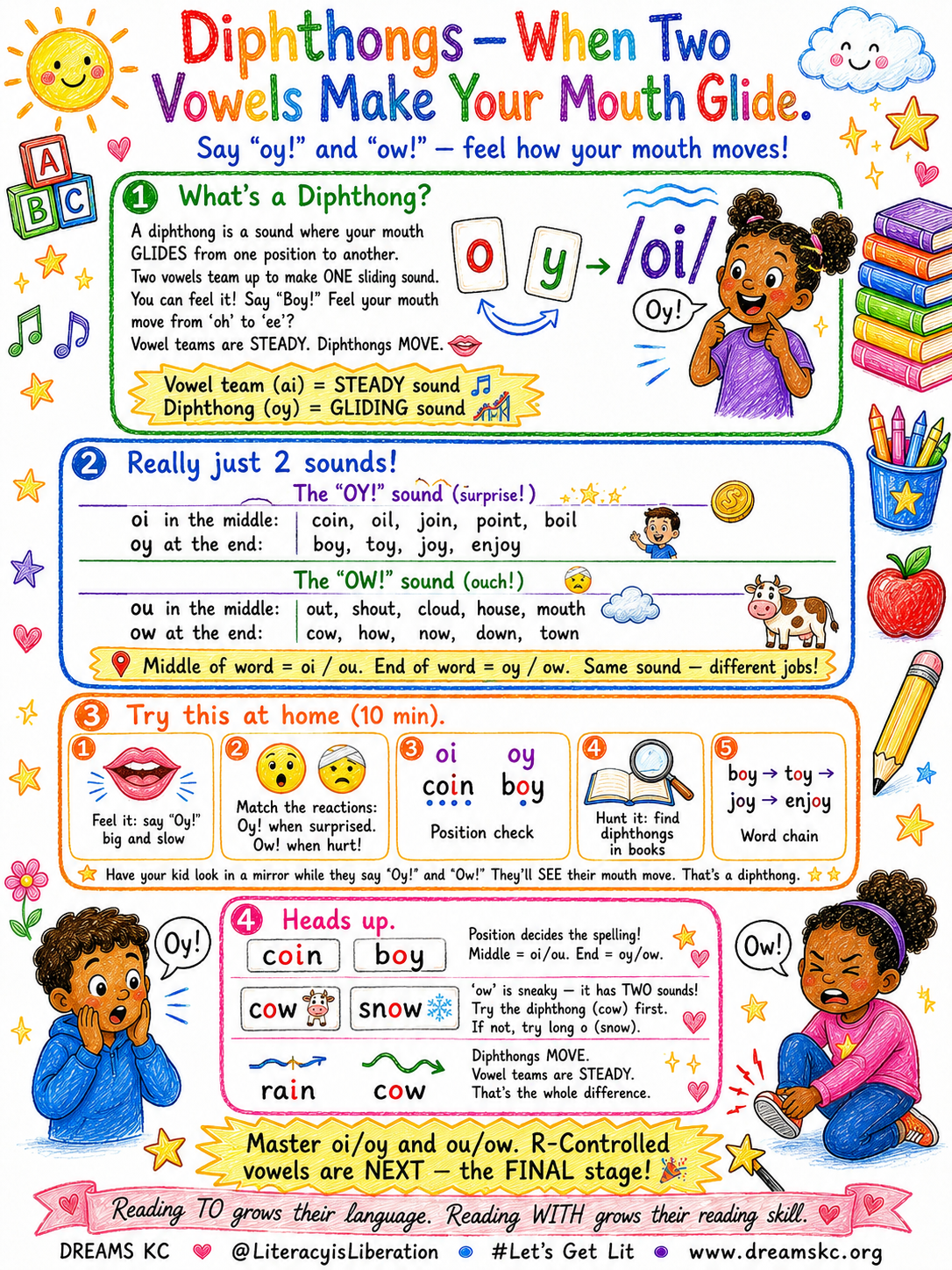
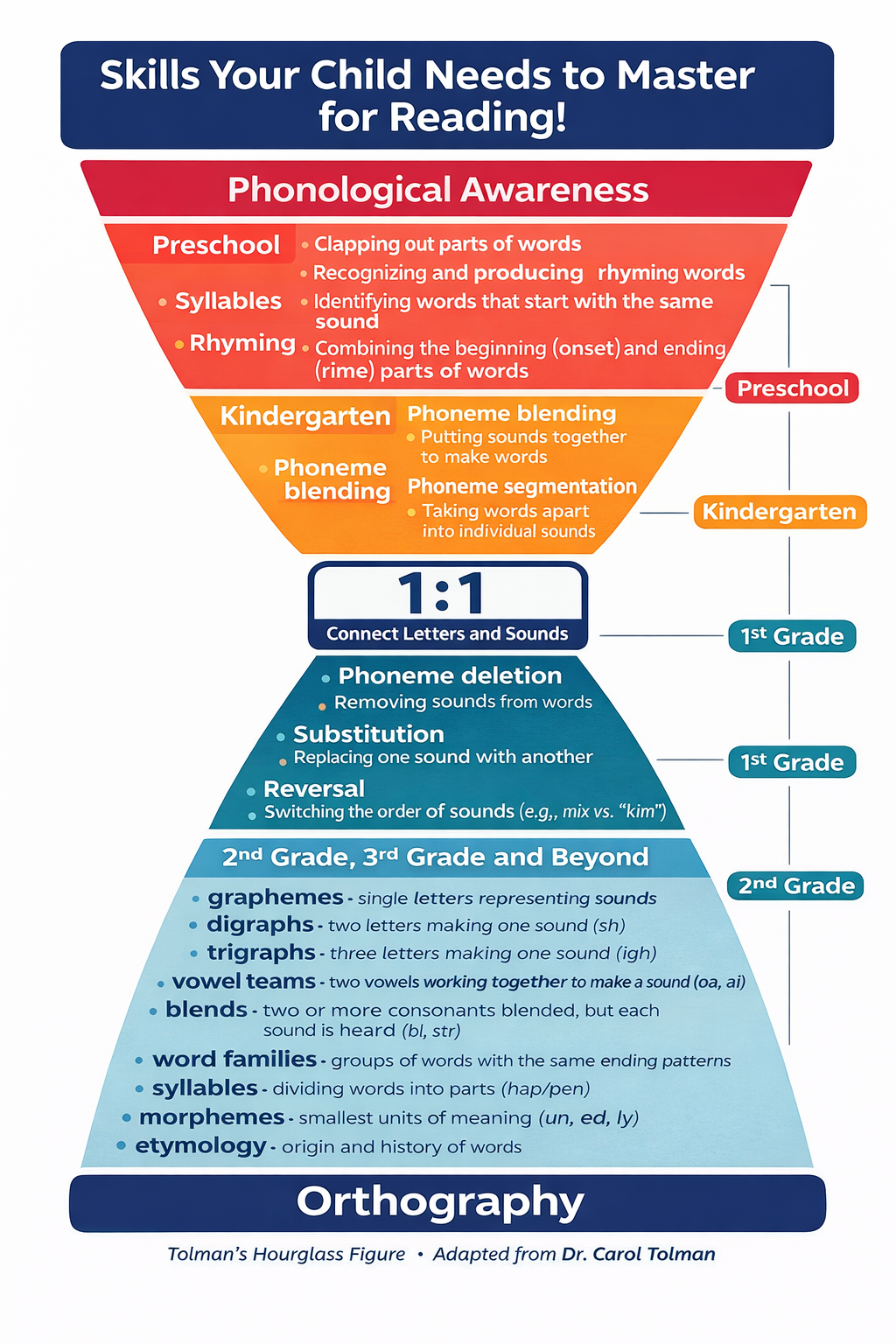
Diagram illustrating skills children need to master reading, categorized by developmental stages from preschool to beyond 3rd grade. Topics include phonological awareness, phoneme blending, connecting letters and sounds, and advanced phonics concepts like digraphs and word families.

Tolman’s Hourglass Figure (modified)

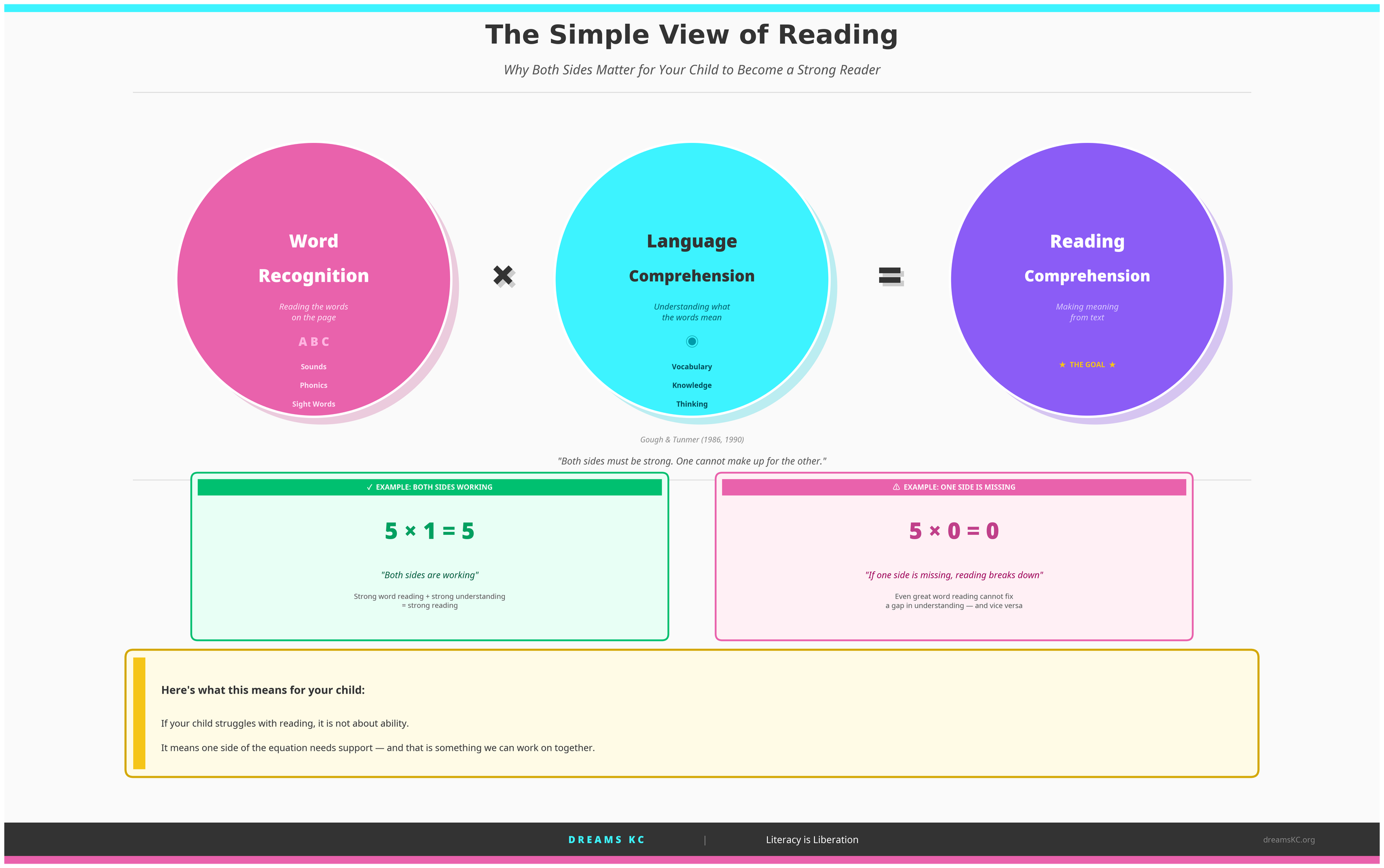
A colorful infographic titled 'The Simple View of Reading' explains the relationship between word recognition, language comprehension, and reading comprehension, with examples and supporting notes.

The Simple View of Reading for Parents

Reading is a simple equation—but both sides matter.


Your child must be able to read the words and understand what they mean at the same time. If either side is weak, reading becomes difficult. When both are strong, your child can truly make meaning from text.